News
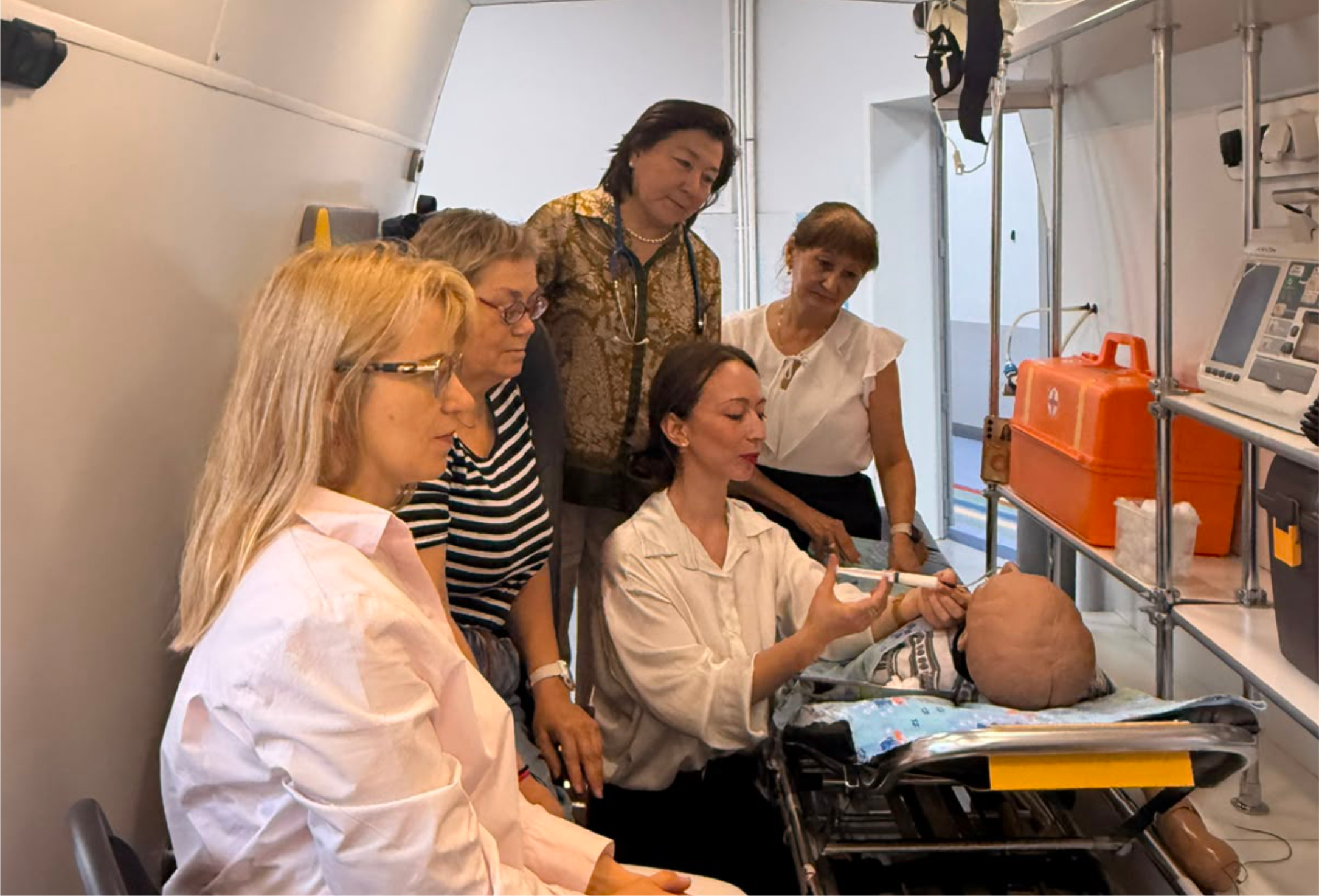
The President of the Republic of Kazakhstan has identified the state care to the health of the younger generation as one of the key priorities of the state, which is reflected in the country’s New Constitution. Particular attention must be paid to ensuring quality medical care for terminally ill children. To ensure the consistent implementation of the key provisions of the Standard for the Provision of Palliative Care to Children in the Republic of Kazakhstan, fr om June 22, 2026, to July 3, 2026, KMU held professional development courses on the topic of "Fundamentals of Providing Palliative Care to Children. Nursing Care." The course participants included faculty members who implement educational programs of medical training and nursing staff of the university, as well as a clinical psychologist. At the beginning of the course, V.B. Sirota, Doctor of Medical Sciences, Professor at the Department of Oncology and Radiology, discussed with the participants issues related to providing palliative care to children in the Republic of Kazakhstan, establishment of a multidisciplinary team, and allocation of responsibilities.
High-quality pediatric care is essential in providing palliative care; performing interventions and procedures requires sensitivity to their needs, ensuring children's rights for high-quality and safe support. Workshops were held at the CSET of KMU, which provided the necessary equipment for practicing skills in delivering specialized pediatric care, including care for stomas, catheters, tubes, and other devices. B.T. Tukbekova, Doctor of Medical Sciences, Professor at the Department of Pediatrics and Neonatology, issues related to the nutrition of severely ill children, emphasizing the importance of medical nutrition therapy, age-specific adaptation of formulas, consideration of contraindications for their use, and monitoring of children’s nutrition, with mandatory discussion of these issues with caregivers were presented for discussion. The outcome of the course was a workflow simulation of members of a multidisciplinary team. The participants were presented with a case of a real patient with palliative status; during the discussion, team members identified the child’s core needs and developed an individualized pediatric care plan. Emphasis was placed on the ability to develop specific measures, assign responsible persons, and set deadlines so that the progress of the process could be tracked and make timely adjustments. The result of the collaborative work of all participants in this module was a teamwork in which course participants, together with a faculty member, after role practicing, discussed one of the possible options for the work of a mobile home care team. It was an interesting experience in learning to listen and hear each other, wh ere the correct performance of a practical skill was based on one of the WHO’s key principles—nurturing care for children. This course is important and relevant, and the experience gained will enable the university’s faculty to further integrate issues related to palliative care for children and nursing care into all levels of training of healthcare professionals, including professional development programs for nursing professionals.
