News
Symbols That Unite Generations
25 May 2026
In the setting of modern social and political transformations, issues related to civic education of young people, the development of patriotism, and respect for state values are becoming increasingly significant. The adoption of the new Constitution of the Republic of Kazakhstan on March 15, 2026, marked an important stage in the country’s development aimed at strengthening democratic principles, national unity, and civil responsibility. In this regard, events promoting awareness of the role of state symbols as the foundation of Kazakhstan’s independence, sovereignty, and national identity are of particular importance.On the eve of the Day of State Symbols of the Republic of Kazakhstan, annually celebrated on June 4, an event for second-year students was held at the Department of History of Kazakhstan and Social-Political Disciplines.
The participants included students of groups 2021 and 2031 from the Kazakh-language division of the School of Medicine, students of the International Faculty from groups 2005, 2006, and 2008, as well as Assistant Professor of the Department of History of Kazakhstan and Social-Political Disciplines, Dinara Yermekovna Dzhakupova.
A special feature of the event was its bilingual format — it was conducted in both Kazakh and English, creating an atmosphere of cross-cultural communication, unity, and mutual respect.
The event took place outdoors and began with the ceremonial listening of the National Anthem of the Republic of Kazakhstan. This moment united all participants and set special patriotic atmosphere for the event.
After the official opening, students were divided into four mixed teams of six participants each. Every team was given time to introduce themselves, choose a team name, and create a motto. This format contributed to the development of team spirit, communication skills, and interaction between students from different faculties.
To create a dynamic and friendly atmosphere, an interactive warm-up activity was organized. All participants stood in a large circle and quickly passed a ball to one another. The participant holding the ball after the signal had to answer a question related to the state symbols of Kazakhstan. The activity allowed students not only to test their knowledge but also to become actively engaged in the event.
The main part of the program consisted of three thematic stations: “Coat of Arms,” “Flag,” and “Anthem.”
At each station, teams completed special tasks aimed at expanding their knowledge of the state symbols of the Republic of Kazakhstan, their history, significance, and role in shaping national identity.
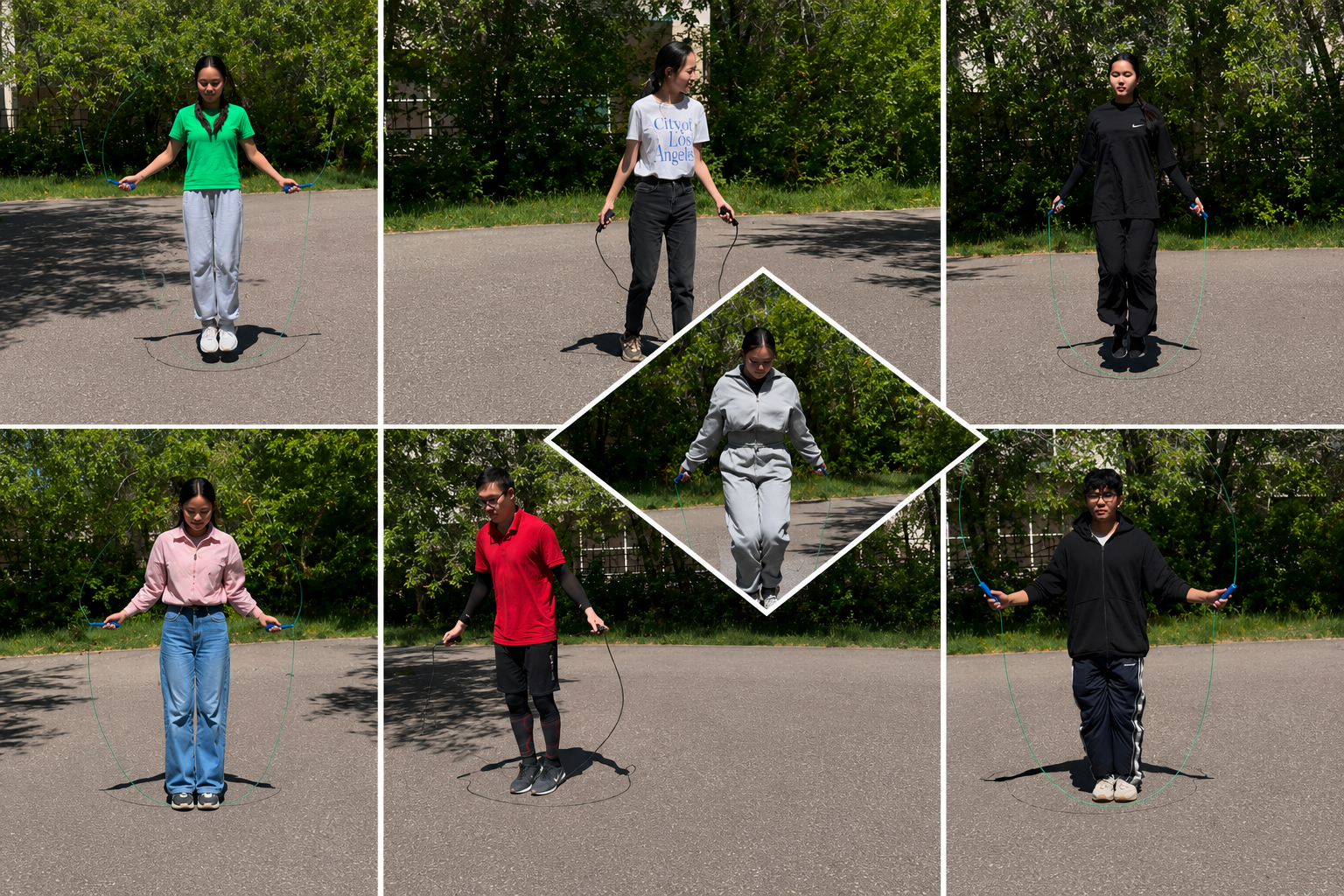
Particular interest among participants was given to the sports and intellectual activities. One of the most memorable stages involved skipping rope contest. Representatives of each team had one minute to complete as many jumps as possible. The number of jumps was converted into game points awarded to the team after correctly answering a thematic question. This format successfully combined intellectual activity with physical exercise, making the event even more emotional and fast-paced.
Another exciting team task focused on knowledge of world flags. Each team received ten cards displaying national flags of different countries, and participants had to identify the corresponding states. This activity promoted the development of outlook, logical thinking, and teamwork skills.
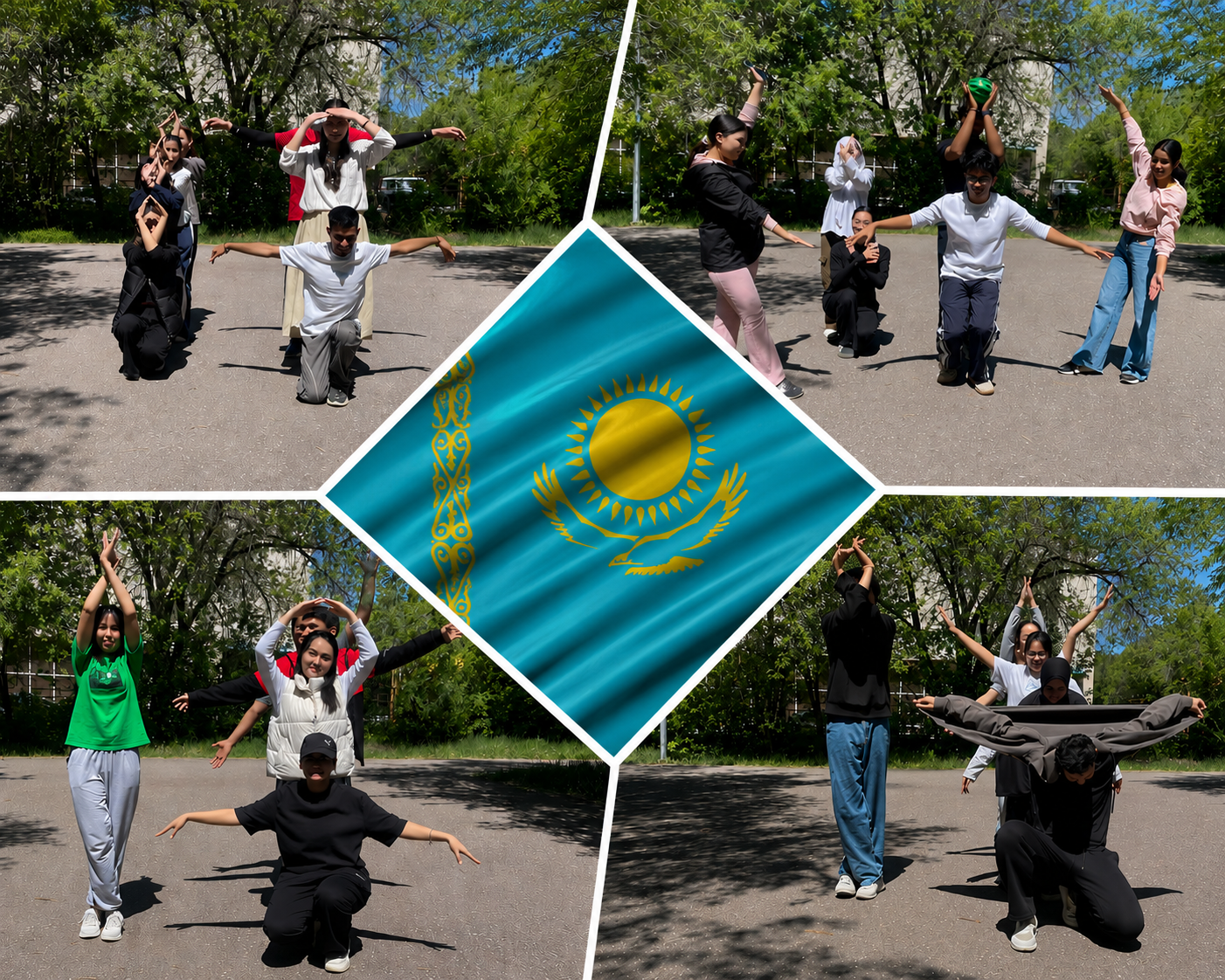
The final stage of the event was a creative task in which participants were asked to depict the National Flag of the Republic of Kazakhstan. Students demonstrated creativity, artistic abilities, and original approaches in completing the task. Each team presented its own interpretation of one of the country’s main symbols, incorporating ideas of patriotism, unity, and respect for national values.
Students emphasized that state symbols are not only important attributes of the country’s independence, but also reflections of the values of modern Kazakhstan — peace, stability, respect for human rights, and a commitment to development.
The event became a vivid example of combining the educational process with patriotic upbringing and team collaboration. Such activities contribute to the formation of civic engagement among young people, strengthen respect for national values, and foster a sense of responsibility for the future of the country.
The event was organized by Bagdat Sabitovna Bitenova, Associate Professor of the Department of History of Kazakhstan and Social-Political Disciplines.
News feed
Published:
10.07.2026
Published:
10.07.2026
Published:
07.07.2026
Published:
03.07.2026
Published:
02.07.2026
Published:
30.06.2026
Published:
29.06.2026
Published:
29.06.2026
Published:
25.06.2026
Published:
25.06.2026
Published:
09.06.2026
Published:
05.06.2026
Published:
03.06.2026
Published:
03.06.2026
Published:
01.06.2026
Published:
29.05.2026
Published:
26.05.2026
Published:
26.05.2026
Published:
26.05.2026
Published:
25.05.2026
