News
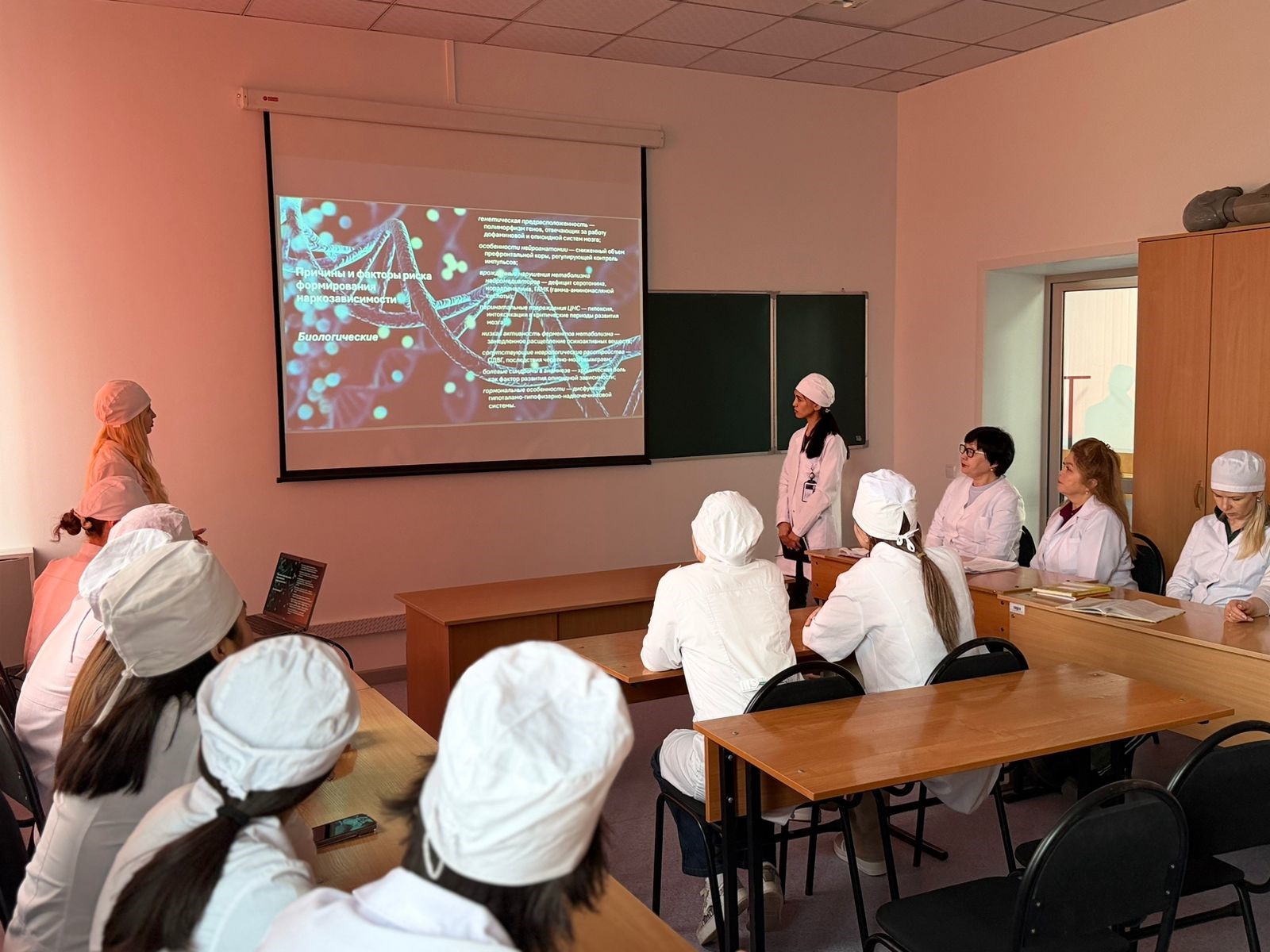
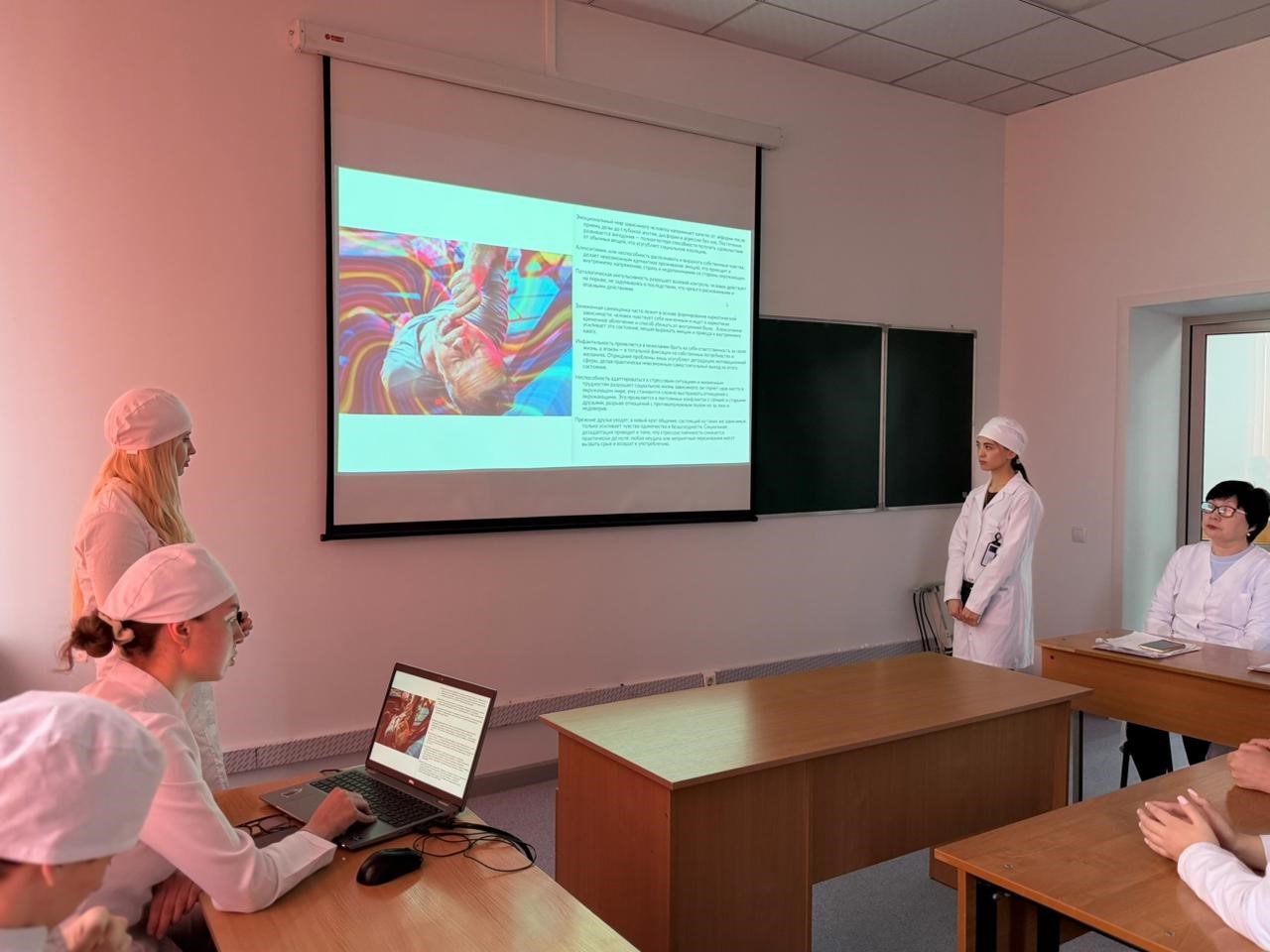
On April 15, 2026, a roundtable discussion on the topic “Current Data on Types of Drugs and Routes of Administration” was held at the Department of Physiology (Course of Pathophysiology) for students of groups 2003 (SFO) and 3036 of the “Medicine” educational program. The roundtable was organized by the professors of the Department of Physiology, Saule Bazarbayevna Zhautykova and Fatima Samitovna Abikenova.
Presentations analyzing modern types of addictive substances, their routes of administration, and their effects on the human body were delivered by students of group 2003 SFO: Eldira Kolybayeva, Alexandra Omelyanenko, Olga Prenko, as well as students of group 3036: Aidana Aldabergenova, Zarina Bekseit, and Denis Badin.
The presentations covered contemporary classifications of narcotic agents, their pharmacological characteristics, and their effects on various body systems. Particular attention was given to the main routes of administration—injectable, inhalational, peroral, and others—as well as their clinical and social consequences. During the discussion, Professor S.B. Zhautykova emphasized the medical and social significance of drug addiction and the importance of prevention of these types of psychological dependence.
The session included discussions and case studies, which helped advance students’ knowledge, develop clinical thinking, and enhance their professional training. The case studies addressed issues such as methods of drug distribution, causes of development of addiction, and the understanding of addiction as a disease rather than a matter of willpower. All those surveyed (100%) correctly answered to the assigned tasks. Common myths and facts about formation of dependence were also discussed.
The event was constructive and took place in an atmosphere of active participation and strong student engagement, contributing to the development of professional liability of future doctors and raising awareness of socially significant issues in modern society.